Keep
Tools that work well:
- accounting
- calendars
- CRM A customer relationship management tool used to track customers, enquiries, sales or contacts.
- booking systems
- payment systems
- cloud storage
- industry platforms
Approach
SaaS Software you rent online, usually paid monthly, such as accounting, booking or CRM tools. is often right for common problems. Custom software is better when the workflow The steps people follow to get a job done, including forms, approvals, emails, spreadsheets and handovers. is unique, repetitive, awkward, expensive, or important to the way the organisation operates.

A balanced approach
Tools that work well:
Custom software can:
Replace only what genuinely causes problems:
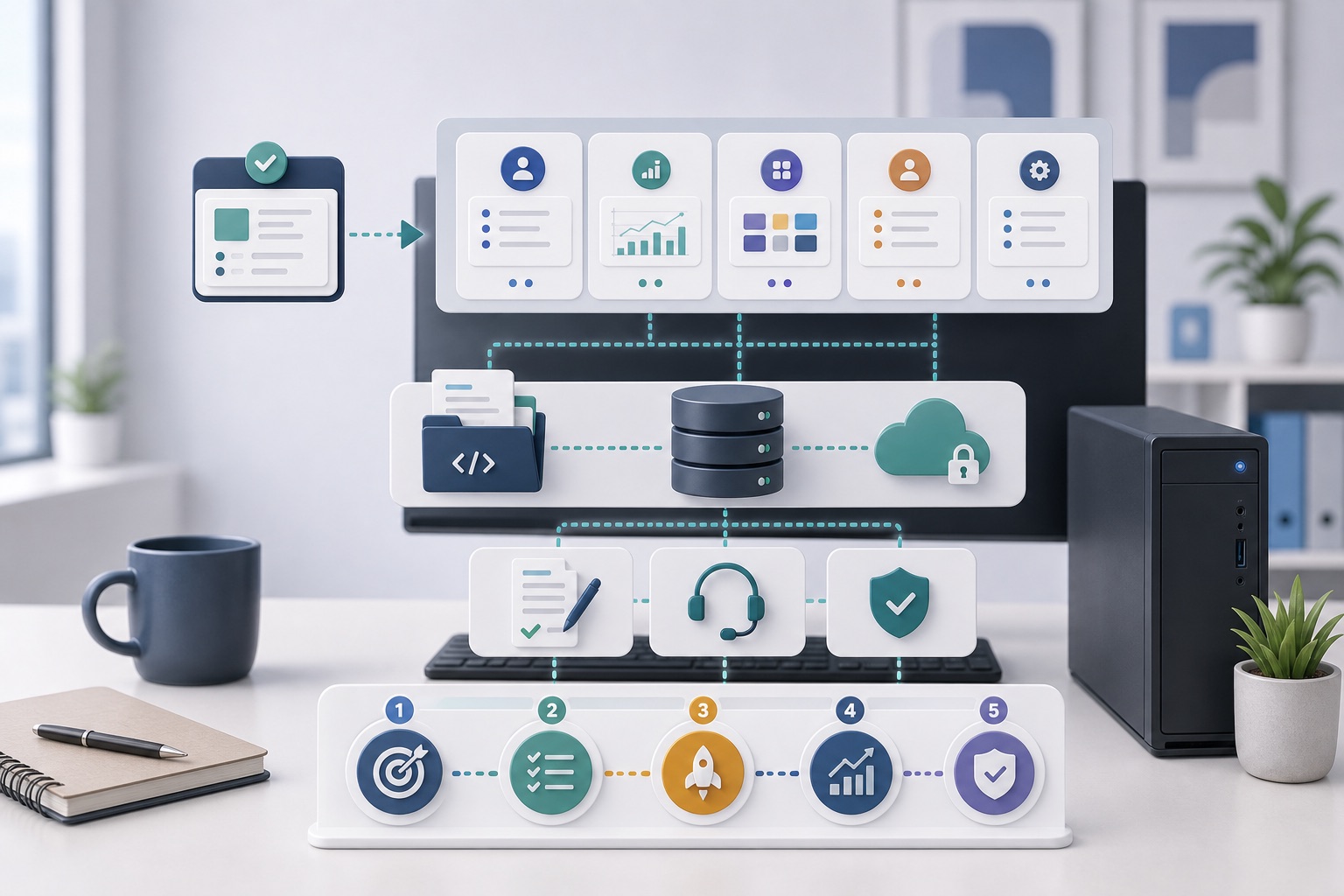
Ownership and costs
You own the project-specific source code The underlying instructions developers write to create the software. created for your business, subject to agreed terms, third-party libraries, open-source components, reusable modules and hosting arrangements.
This keeps the promise practical rather than vague. The goal is portable, maintainable software with clear terms from the beginning.
After the initial build, ongoing costs are usually limited to hosting, support, maintenance and any third-party services you choose to keep.
In many cases this can mean lower ongoing costs than a growing stack of subscriptions, but the right answer depends on the workflow and the value of the problem being solved.
Focused first project
A useful first project might replace one spreadsheet, automate one report, connect two systems or create one internal dashboard. That gives the business something measurable before making bigger decisions.
The initial chat is free. Any paid work is agreed in writing before development begins.
Book a free initial chat